Steak Doneness Guide
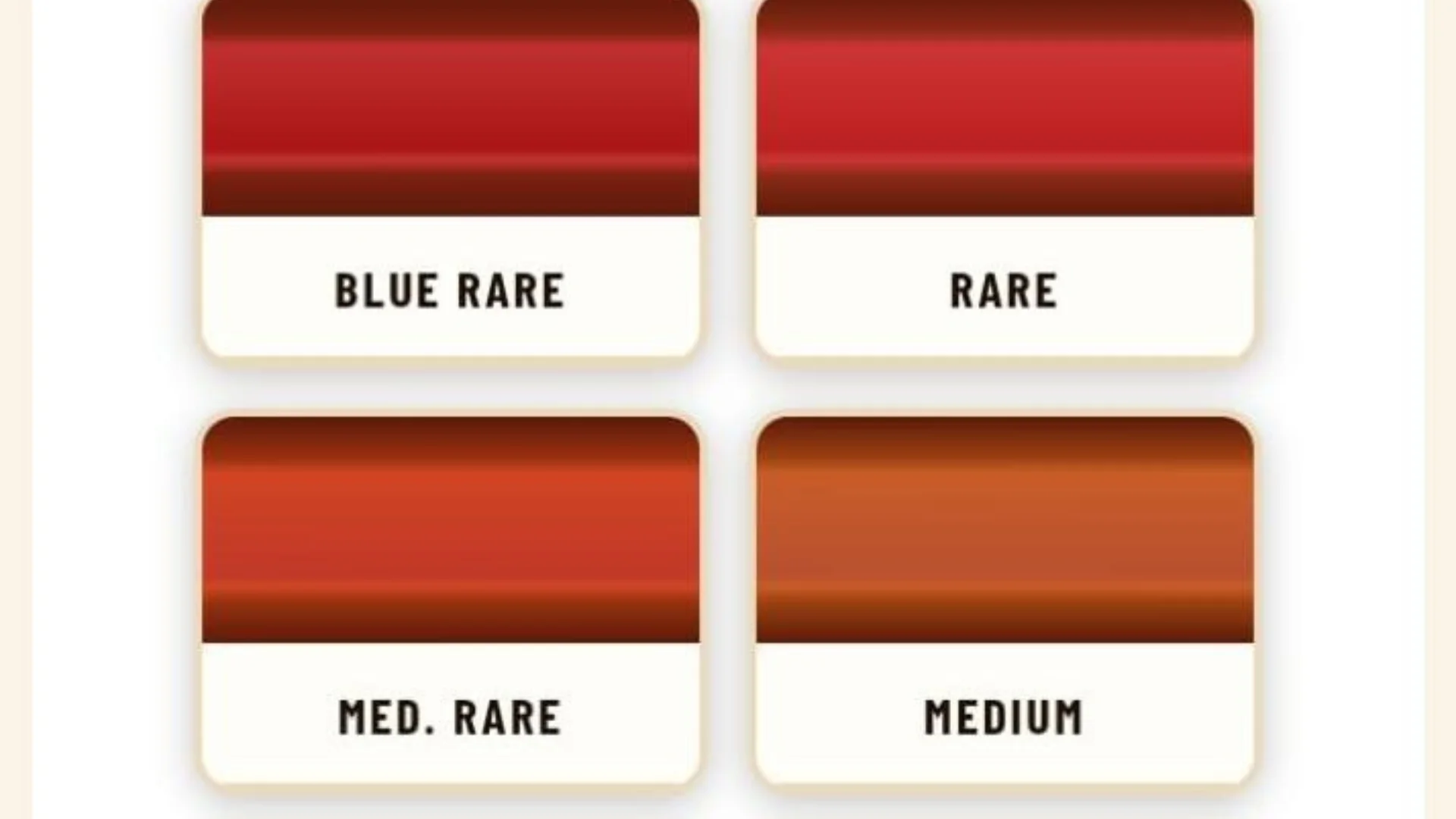
Deeply red, barely warm center. Nearly raw with a seared crust.
Very SoftBright red center, cool to warm throughout. Very tender and juicy.
Soft & JuicyWarm red center. Most popular — peak flavor and maximum juiciness.
Chef’s ChoicePink center throughout. Firm but still pleasantly juicy.
Firm & MoistSlightly pink center. Firmer texture with less moisture retained.
FirmNo pink remaining. Fully cooked through with a firm, dense texture.
Very FirmTap any card to learn more
Ribs are a famous dish and are popular among people at Texas Roadhouse. Most customers want to know at what temperature the ribs are cooked and how many steak doneness levels there are. Steaks that are cooked at specific temperatures have their own color, texture, and juiciness.
We have created a special tool for you called the Steak Doneness Guide. It helps you determine the steak’s temperature, color, texture, and juiciness. It clearly explains every doneness level and makes it easy to select your favorite steak.
What is a steak doneness tool?
Steak doneness is a premium and high-quality guide that determines the internal temperature of steaks. It also helps identify the cooking level of steaks. The temperature of a steak decides how well it is cooked, along with its texture and juiciness.
It has six categories that explain all the doneness levels, including color, texture, and cooking stage. You can check it online or at any branch of Texas Roadhouse:
- Blue rare
- Rare steak
- Medium rare
- Medium steak
- Medium well
- Well done
Steak Doneness Levels
Steak doneness levels consist of the following:
Blue Rare
Blue rare steak has a temperature of about 115°F (approximately 46°C). Its texture is very soft, and its color is deep red with barely any browning in the center. It is soft and juicy.
Rare Steak
Rare steak has a temperature of 120–125°F. Its texture is very soft, and its flavor is rich and balanced. It is a soft and juicy steak, often associated with cuts like ribeye and tenderloin.
Medium Rare (Most Popular)
Medium rare is the chef’s favorite and the most popular in steakhouses. Its temperature is about 130–135°F. Chefs recommend it because it has maximum juiciness and peak flavor.
Medium Steak
Medium steak is pink at the center with a temperature of about 145°F. It is a balanced option with a firmer texture while still retaining some juiciness. It is a popular choice for many people.
Medium-well
Medium-well steak has a temperature of approximately 155°F. It has a slightly pink center and a firmer texture with less moisture. It is more cooked and less juicy.
Well Done
Well done steak has a temperature of about 165°F. It is fully cooked, with no pink color remaining. Its texture becomes firm, and the flavour is still rich but less juicy compared to lower doneness levels.
Chart
For your information, here are the details about the steak doneness guide.
|
Doneness level |
Temperature |
Colour |
Texture |
|
Blue Rare |
115F/46C |
Deeply Red |
Very Soft |
|
Rare Steak |
125F/52C |
Bright Red |
Soft & Juicy |
|
Medium Rare |
135F/57C |
Warm Red |
Maximum Juiciness |
|
Medium Steak |
145F/63C |
Pink Center |
Firm & Moist |
|
Medium-well |
155F/68C |
Slightly Pink |
Firm |
|
Well done |
165+F/72+C |
No Pink |
Very Firm |
How to Check Doneness Level?
It is easy to determine the steak’s doneness level. You need to follow these steps:
- Use a meat thermometer, which is a reliable device for measuring internal temperature.
- Use the touch test by gently pressing the steak with your fingertips.
- Check the doneness by observing the color and texture of the steak.
Best Steak Cuts for Each Doneness
The Texas Roadhouse menu has many steaks with different doneness levels. Different cuts pair better with different levels of doneness.
Blue rare is best for lean cuts like filet mignon. Rare steak works well with tenderloin and ribeye.
Medium-rare is suitable for almost all types of steaks, especially ribeye, strip, and porterhouse. Medium doneness is ideal for porterhouse and T-bone steaks. Medium-well also works well for ribeye. Well-done is often preferred for sirloin and flat iron.
Why Medium-Rare is Recommended?
Medium rare is the most popular doneness level, not only among guests but also among chefs, who consider it the best choice for steak. It has many qualities, such as good marbling, maximum juiciness, and a balanced flavor.
It is considered one of the best ways to enjoy steak and ribs. It is also commonly available for most steak cuts.
Common Mistakes When Cooking Steak
If you are cooking these steaks, you need to avoid these mistakes. You should be careful before, during, and after cooking:
- Not resting the steak is a common mistake.
- Cooking a cold or frozen steak directly.
- Not using a thermometer to check the temperature of the steak.
Internal Temperature vs Appearance
Sometimes the color of the steak can mislead you when judging its doneness, so you should use a thermometer. A thermometer is a reliable tool that tells you the exact level of steak doneness. Color can be helpful only if you understand it well; otherwise, it is better to rely on a thermometer.
Using Our Interactive Steak Doneness Tool
The Steak Doneness Guide tool is the perfect tool; within minutes, you can gain knowledge easily. It is ideal for understanding different doneness levels.
You just need to open it and tap any card to get full information. It includes all types of guides. It helps you choose your favorite steak.
Conclusion
The steak doneness guide is very important for choosing the correct doneness. It is one of the best tools you can use anywhere without signing up; just open it and learn about steak doneness.
Today, visit and learn more about the steak doneness guide.